How to Avoid Wildlife Encounters at Resorts: The 2026 Expert Safety Guide
The expansion of luxury hospitality into ecologically sensitive corridors has fundamentally altered the spatial dynamics between human leisure and animal behavior. As resorts push further into “frontier” landscapes—coastal mangroves, montane forests, and arid savannas—the traditional boundary between the manicured environment and the wilderness has become increasingly porous. This overlap is not merely a matter of proximity; it is a complex intersection of attractants, habitat fragmentation, and the erosion of instinctive fear in native species.
Managing these interactions requires a departure from the “pest control” mindset of the twentieth century. Modern hospitality safety is rooted in ethology—the study of animal behavior—and the understanding that most encounters are the result of predictable environmental triggers rather than random biological aggression. The challenge for the modern traveler and the resort operator alike is to maintain the “wild” appeal of a destination while neutralizing the variables that lead to conflict.
In 2026, the sophisticated traveler recognizes that safety in these environments is an active, rather than passive, state. It involves a nuanced understanding of “Attractant Management” and “Sensory Boundaries.” This article serves as a definitive architectural and behavioral blueprint for navigating high-end remote stays without disturbing the local ecosystem or inviting unwanted biological intrusion. By shifting the focus from reaction to prevention, we can preserve the integrity of the travel experience and the safety of the resident wildlife.
Understanding “how to avoid wildlife encounters at resorts”
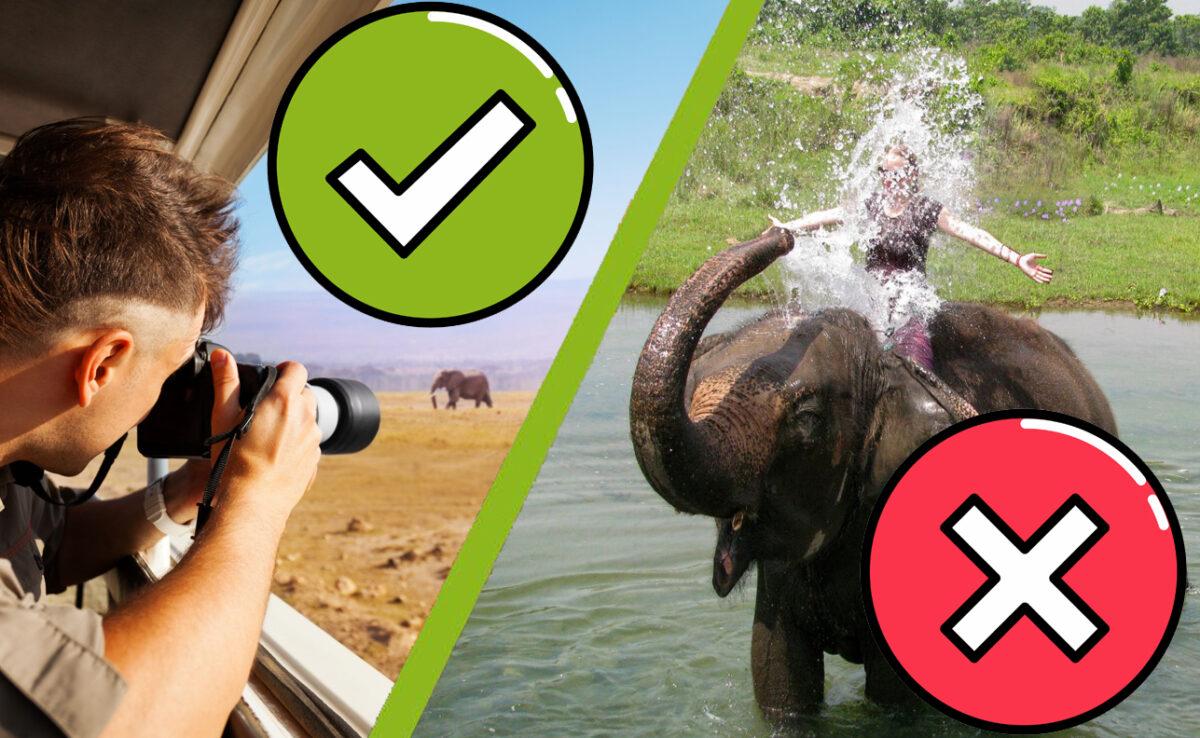
To master how to avoid wildlife encounters at resorts, one must first decouple the concept of “wildlife” from “danger.” In a resort context, the most significant risks are rarely predatory; instead, they are the results of “Conditioning”—the process by which an animal learns to associate human presence with a caloric reward. A multi-perspective analysis suggests that most encounters are failed negotiations of space. From the animal’s perspective, a resort balcony is often seen as a high-value foraging ground; from the guest’s perspective, it is a private sanctuary.
A common misunderstanding in this field is the “Distance Fallacy.” Many guests assume that if they are within the fenced perimeter of a five-star property, they are in a biologically sterile zone. In reality, the lush landscaping, irrigation, and food waste of a luxury resort create a “Magnified Habitat” that is often more attractive to wildlife than the surrounding dry scrub or dense forest. Avoiding encounters requires the guest to recognize that they are living inside a high-draw ecological bait station.
Oversimplification risks often lead to ineffective “Hard Barriers.” While fences and glass are intuitive, they frequently fail because they do not address the “Sensory Leakage” of the resort. Sound, light pollution, and olfactory signals (the smell of a grill or sunscreen) travel far beyond physical walls. To truly mitigate encounters, the traveler must adopt a “Low-Signature” lifestyle, reducing the invisible signals that pique the curiosity of local fauna. This involves a cognitive shift from “How do I keep them out?” to “How do I stop inviting them in?“
Historical Context: The Permeability of the Modern Resort
The evolution of resort architecture has moved from “Fortress Hospitality” to “Biophilic Integration.” In the early to mid-twentieth century, luxury hotels in wild areas were often built as isolated, walled compounds. These structures prioritized total exclusion, often utilizing aggressive landscaping and chemical deterrents to create a barrier between the guest and the “jungle.“
By the 2010s, the “Seamless Indoor-Outdoor” trend took hold. Architects prioritized floor-to-ceiling sliding glass, open-air showers, and thatched roofs that integrated directly into the canopy. While aesthetically superior, this era marked the beginning of “Heightened Conflict.” Animals that were once kept at a distance were now literally invited into the living space.
In 2026, we have entered the “Integrated Mitigation” era. Modern resorts are designed with “Sacrificial Corridors”—paths that allow animals to bypass the guest areas—and “Hard-Shelled Zones” for sleeping and dining. The goal is no longer to fight the environment but to direct the flow of wildlife through “Environmental Architecture,” ensuring that human and animal paths rarely intersect.
Conceptual Frameworks and Ethological Mental Models
To manage biological risk, professionals utilize several core mental models:
1. The “Caloric ROI” Framework
Animals are biological economists. They calculate the energy required to obtain food versus the energy provided by that food. A resort provides a massive Return on Investment (ROI) because discarded room service or fruit in a decorative bowl requires zero hunting effort. To avoid encounters, one must ensure that the resort environment offers a “Negative ROI”—making it more difficult for the animal to access human resources than natural ones.
2. The “Desensitization Gradient.”
This model tracks the loss of an animal’s natural “flight response.” When an animal is exposed to humans without negative consequences, it moves down the gradient toward “Habituation.” Once an animal is habituated, the risk of an encounter increases by an order of magnitude. Guests must maintain the “Gradient” by never rewarding proximity with food or attention.
3. The “Edge Effect” Model
In ecology, the “Edge” is where two habitats meet. Resorts are essentially giant “Edges.” This framework helps guests identify “High-Traffic Zones”—such as the line where the manicured lawn meets the native brush. Avoiding encounters involves recognizing these zones as high-risk transit corridors and maintaining a “Buffer Distance” during dawn and dusk.
Key Categories of Attractants and Territorial Markers
Understanding the specific variables that draw wildlife is essential for prevention. These can be categorized by the sensory system they engage.
| Category | Primary Attractant | Species Typically Engaged | Mitigation Strategy |
| Olfactory | Food waste, perfumes, toiletries. | Bears, raccoons, monkeys, canids. | Use of airtight “Bear-Proof” canisters; unscented products. |
| Visual | Reflective surfaces, colorful fabrics. | Birds, some primates, and reptiles. | Non-reflective glass coatings; neutral outdoor attire. |
| Auditory | High-frequency electronics, loud music. | Small mammals, bats, and nocturnal predators. | Noise-reduction protocols; low-vibration sound systems. |
| Thermal | Heated pools, building exhaust. | Reptiles, insects, amphibians. | Proper sealing of vents and pool covers at night. |
| Hydrological | Drip irrigation, standing water. | All local fauna. | Xeriscaping: elimination of stagnant water sources. |
Decision Logic: The “Attractant Audit”
Before occupying a suite, a guest should perform a “Sensory Sweep.” If there is an open-air fruit bowl on the counter and the balcony door is left unlatched, the suite is “Active.” Closing the “Sensory Loop” by stowing food and securing latches is the first step in individual mitigation.
Detailed Real-World Scenarios and Systemic Failures
The “Monkey-Proof” Latch Failure
-
Context: A luxury resort in Southeast Asia utilizes sophisticated sliding doors.
-
The Incident: A guest leaves a door “closed but not latched.” A local macaque, having observed human behavior (social learning), slides the door open to access a minibar.
-
The Failure: The guest assumed a “closed” door was a “secured” door.
-
The Lesson: Primates are cognitive opportunists. In their habitat, a mechanical barrier is only effective if it is locked.
The “Irrigation Magnet”
-
Context: An arid-zone resort in Arizona with a lush, irrigated courtyard.
-
The Incident: A guest is startled by a javelina or rattlesnake on a walkway at night.
-
The Failure: The resort’s over-irrigation created a “Moisture Oasis” that the surrounding desert could not compete with, drawing thirsty wildlife into guest corridors.
-
The Lesson: In arid climates, water is the primary attractant. Avoiding encounters requires sticking to “Dehydrated Zones” (dry, paved paths) after dark.
Resource Dynamics: The Cost of Biological Exclusion
The financial and logistical burden of wildlife management often dictates the “Safety Level” of a property.
| Expense Item | Direct Cost (USD) | Indirect Cost (Opportunity) | Resilience Level |
| Electric Perimeter Fencing | $10,000 – $50,000 | Aesthetic “fortress” feel. | High (exclusionary). |
| Bear-Resistant Infrastructure | $500/unit | Maintenance of heavy latches. | Moderate (containment). |
| Ethological Staffing | $60k – $90k/year | Guest education time. | High (prevention). |
| Ultrasonic Deterrents | $2,000/property | Impact on non-target species. | Low (varied results). |
The “Safety Premium” of a resort is often invisible. A cheaper resort may cut costs by using standard trash cans rather than animal-proof ones, essentially subsidizing their room rate by increasing the risk of wildlife encounters. Travelers should evaluate a resort’s “Waste Management Protocol” as a primary indicator of their commitment to safety.
Tools, Strategies, and Mitigation Systems
The modern traveler utilizes several layers of defense:
-
Sensory “Clean” Zones: Maintaining a suite free of food smells.
-
Active Deterrence: Carrying a high-lumen (1000+) flashlight at night to “Break the Night Vision” of curious animals.
-
Physical Gapping: Ensuring at least a 6-inch gap between the balcony and any overhanging trees (to prevent “Leaping Access”).
-
“Bear-Key” Logic: Even in non-bear areas, the use of two-stage opening mechanisms for outdoor bins is the gold standard for exclusion.
-
Noise “Alerters”: In dense bush, utilizing low-frequency bells or constant soft conversation to avoid “Surprise Encounters,” which are the most common cause of defensive aggression.
-
UVI (Ultra-Violet) Coatings: Applying non-visible films to windows to prevent bird strikes, which can attract scavengers to the base of the building.
Risk Landscape: Taxonomy of Interactions
Risk is not a monolith; it is a spectrum of “Intensity vs. Frequency.“
-
Nuisance Encounters (High Frequency, Low Severity): Monkeys stealing sunglasses, raccoons in trash. These are “Economic Risks.“
-
Defensive Encounters (Low Frequency, Moderate Severity): A mother animal protecting young after a guest accidentally wanders too close. This is a “Spatial Risk.“
-
Predatory Encounters (Ultra-Low Frequency, High Severity): Extremely rare, usually involving habituated large carnivores. This is a “Conditioning Risk.“
The goal of how to avoid wildlife encounters at resorts is to move the property from “Habituated” to “Aversive.” This is achieved when animals associate the resort with “Boredom” (no food) and “Annoyance” (bright lights/noise) rather than reward.
Governance and Long-Term Adaptation
A resort’s safety is only as good as its “Maintenance Cycle.” Wildlife is constantly testing the perimeter.
The “Resilience” Checklist:
-
Weekly Latch Inspections: Salt air or humidity can corrode spring-loaded animal-proof latches.
-
Canopy Pruning: Maintaining a “Non-Contiguous Canopy” to prevent arboreal species (monkeys, snakes, cats) from moving from the forest to the roof.
-
Waste Audit: Ensuring that the “Back of House” staff are not leaving food crates open, as this “Seeds” the property with scent trails.
Measurement and Evaluation of Conflict Mitigation
Resorts track their success through “Leading” and “Lagging” indicators:
-
Leading Indicator: “Attractant Count.” The number of unsecured bins or fruit trees on the property.
-
Lagging Indicator: “Incident Rate per 1000 Bed-Nights.” A metric that allows resorts to compare their safety to global benchmarks.
-
Documentation Example: “The Animal Blotter.” A daily log kept by security to track the movement of “Resident” animals (e.g., “The leopard was seen at the East gate at 2:00 AM”). Checking this log upon arrival allows the guest to build a “Mental Map” of current activity.
Common Misconceptions and Oversimplifications
-
Myth: “Feeding animals helps them stay away from guests.”
-
Correction: This is the most dangerous misconception. Feeding creates “Food Conditioning,” which leads to aggressive begging and eventual “Problem Animal” euthanasia.
-
-
Myth: “Light keeps all animals away.”
-
Correction: While it deters some, light attracts insects, which attract amphibians, which attract snakes. Light creates a “Food Web” at your door.
-
-
Myth: “I’m safe on the second floor.”
-
Correction: Many of the most problematic resort species (monkeys, snakes, leopards) are expert climbers. Height is not a barrier; it is a highway.
-
-
Myth: “Animal-proof bins are 100% effective.”
-
Correction: They only work if they are closed. Most “failures” are human errors where the latch was not engaged.
-
Ethical and Contextual Considerations
The ethics of exclusion are complex. In some regions, over-fencing a resort can cut off “Ancient Migration Paths,” leading to local extinction or increased aggression in the stranded population. Travelers should prioritize “Permeable Resorts”—those that use “Eco-Corridors” to allow animals to pass through without intersecting with guests.
Contextually, “Safety” looks different in the Serengeti than in the Swiss Alps. In high-risk predator zones, “Avoidance” is a collective effort led by armed or trained rangers. In low-risk zones, it is an individual responsibility of food management. Understanding your specific “Ecological Context” is the final piece of the mitigation puzzle.
Conclusion: The Synthesis of Coexistence
Navigating how to avoid wildlife encounters at resorts is ultimately an exercise in “Environmental Intelligence.” It requires the traveler to stop viewing the resort as an artificial bubble and start seeing it as a node within a larger, living network. Safety is not achieved through dominance or total exclusion, but through the strategic removal of incentives.
When we secure our food, manage our light, and respect the “Edge Zones” of the forest, we do more than just protect ourselves; we protect the wildness we came to see. An animal that never encounters a human reward is an animal that stays wild, stays wary, and stays alive. The most successful resort stay is one where the only evidence of wildlife is a footprint in the sand or a call from the canopy—observed from a distance, respected, and left undisturbed.